

Feeling Tired, Achy, or Just “Off”? Low Iron Could Be Why
Do you feel worn out — even after a full night’s sleep?
Do you get headaches often? Or notice your eyes look pale?
You might have low iron. And you’re not alone.
Low iron is one of the most common health issues in the world. Millions of people have it. But many don’t even know. Why? Because the symptoms of low iron can be easy to miss. They come on slowly. They can feel like stress, poor sleep, or just “a busy week.”
But your body is trying to tell you something.
In this article, we break it all down. You’ll learn what the signs of low iron look like, what your eyes can reveal, whether low iron causes bruising, and the best iron-rich foods and meals to add to your diet.
Let’s get into it.
What Is Low Iron — And Why Does It Matter?
Iron is a mineral. Your body needs it every single day.
Its main job is to help make red blood cells. These cells carry oxygen from your lungs to every part of your body. Your brain, your muscles, your organs — they all depend on oxygen to work well.
When your iron drops too low, your body struggles. It can’t carry enough oxygen. That’s when you start to feel it.
Low Iron But Normal Haemoglobin — Is That Possible?
Yes. And this confuses a lot of people.
Haemoglobin is the protein in red blood cells that carries oxygen. When iron is very low, haemoglobin drops too — and that’s called iron deficiency anaemia.
But here’s the thing: your iron can be low before your haemoglobin drops.
This early stage is called iron deficiency without anaemia. Your blood test may look “normal” — but you can still feel real symptoms. Tiredness, brain fog, headaches — all of it.
So if you feel unwell but your doctor says your haemoglobin is fine, ask them to check your ferritin levels too. Ferritin shows how much iron your body has stored. It’s a more sensitive test.
Common Symptoms of Low Iron
The symptoms of low iron range from mild to quite noticeable. Here are the most common ones to look out for:
Tiredness and low energy This is the most common sign. You feel drained. Even simple tasks feel hard. You wake up tired no matter how much you sleep.
Pale skin Your skin may look washed out or dull. This happens because fewer red blood cells means less colour in the skin.
Shortness of breath You may feel breathless doing easy things — like climbing stairs or walking fast. Your body isn’t getting enough oxygen to keep up.
Difficulty concentrating Low iron affects the brain. You may feel foggy, forgetful, or find it hard to focus.
Feeling cold all the time Iron helps regulate body temperature. When it drops, you may feel chilly — even when others feel warm.
Brittle nails and hair loss Your nails may become thin and break easily. You may also notice more hair falling out than usual.
Dizziness Feeling light-headed or dizzy — especially when you stand up quickly — is a common low iron sign.
Can Low Iron Cause Headaches?
Yes. Low iron can cause headaches — and here’s why.
When your body doesn’t have enough iron, it can’t make enough red blood cells. That means less oxygen reaches your brain. Your brain responds by telling blood vessels to expand. This expansion causes pressure — and that pressure causes headaches.
If you get frequent headaches with no clear cause, it’s worth getting your iron levels checked.
Signs of Low Iron in Your Eyes
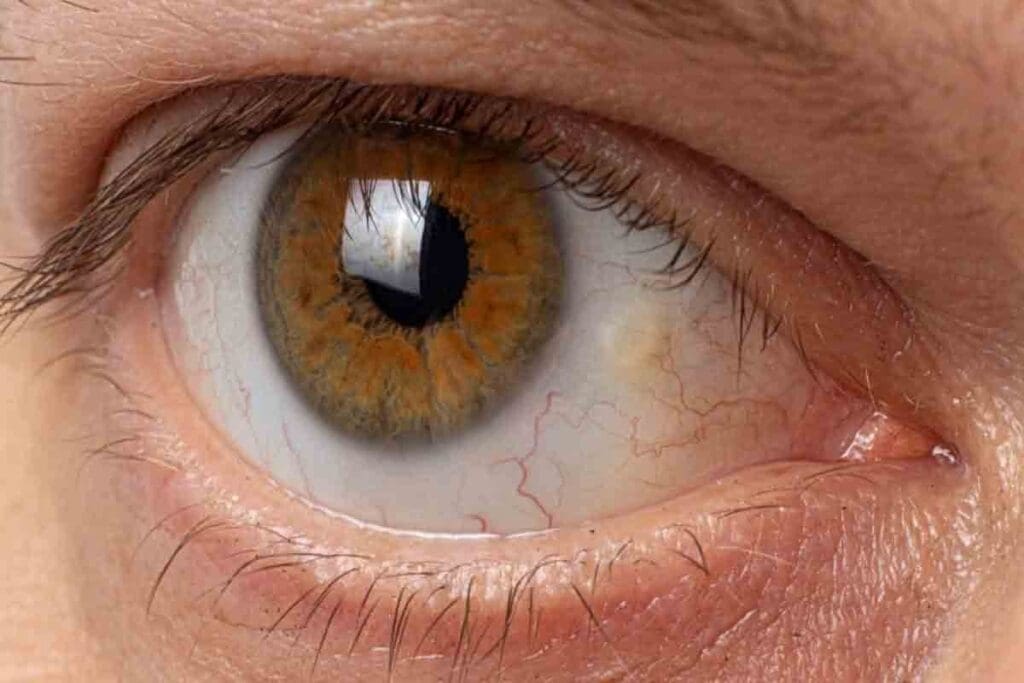
Your eyes can reveal a lot about your health. And when it comes to iron deficiency, your eyes are one of the first places to show signs.
What to Look For
Pale inner eyelids — the most telling sign This is one of the clearest signs of low iron. Pull your lower eyelid down gently and look at the inside. It should be a rich, red-pink colour.
If it looks pale pink or almost white, that’s a key warning sign of iron deficiency. Doctors often check this as a quick way to spot anaemia.
This is what’s meant by iron deficiency eyelids — the inner lining loses its healthy colour when iron is low.
Pale or yellowish whites of the eyes The whites of your eyes (the sclera) may look less bright. In some cases, they can appear slightly bluish or very pale white.
Eye tiredness and soreness Low iron can make your eyes feel heavy, tired, or sore — especially by the end of the day. This is because your eye muscles aren’t getting enough oxygen.
Does Low Iron Affect Eyesight?
In most mild to moderate cases, low iron does not cause permanent vision loss. But it can affect how your eyes feel and function.
You may notice blurry vision, trouble focusing, or light sensitivity. These are all linked to low oxygen delivery to the eye muscles and nerves.
If your vision feels off and you’re also tired and pale, it’s worth speaking to your doctor about an iron test.
How to Check Your Eyelids at Home
It’s simple. Stand in front of a mirror in good light. Gently pull your lower eyelid down with one finger. Look at the inner rim.
Healthy: deep pink or red. Possible low iron: pale pink, light, or white.
This is not a diagnosis — but it’s a useful clue. If yours looks pale, book a blood test.
Does Low Iron Cause Bruising?
This is a common question — and the answer is: sometimes, but it’s not always directly caused by low iron.
Here’s what we know.
Iron itself doesn’t control how easily you bruise. But when iron levels are very low and anaemia sets in, your blood has fewer red blood cells. This can make the skin look more fragile and pale — so bruises may seem more visible.
If you bruise very easily and often, it could also point to a lack of vitamin C, vitamin K, or B12 — nutrients that affect how blood clots.
Does Low Iron Make You Bruise Easily?
Not in the same direct way that low platelets do. But there is a link.
Some people with iron deficiency anaemia do report bruising more easily. The skin becomes more fragile. Small bumps leave bigger marks. And because the skin is paler, bruises show up more.
If you’re bruising a lot and also feeling tired, breathless, or pale, it’s worth getting a full blood panel done — not just iron, but B12, folate, and vitamin C too.
When Should You See a Doctor About Bruising?
See a doctor if:
- You bruise with no clear cause
- Bruises appear in unusual places (like your back or torso)
- Bruises take a long time to heal
- You also have other signs of low iron
Low Iron During Your Period
If you have periods, you lose blood every month. Blood contains iron. So regular blood loss means regular iron loss.
This is why low iron during a period is so common — especially in people with heavy periods.
During and after your period, you may notice your symptoms get worse. You feel more tired. More breathless. More foggy. More prone to headaches. This is your body reacting to the drop in iron.
Who Is Most at Risk?
- People with heavy or long periods
- Those who don’t eat much red meat or iron-rich foods
- Teenagers (whose bodies are still growing)
- People who are pregnant or recently gave birth
- Athletes (especially runners)
Tips to Manage Iron During Your Cycle
- Eat iron-rich foods in the days before and during your period
- Pair iron foods with vitamin C (it helps your body absorb iron better)
- Avoid tea and coffee with meals (they block iron absorption)
- Talk to your doctor if symptoms are severe — they may suggest iron supplements
Quick Summary: Signs of Low Iron
Here’s a simple list of the most common warning signs:
- Tiredness that doesn’t improve with rest
- Pale skin and pale inner eyelids (iron deficiency eyelids)
- Headaches — especially frequent ones
- Shortness of breath during light activity
- Feeling cold all the time
- Dizziness or light-headedness
- Brain fog or poor concentration
- Brittle nails and hair thinning
- Sore or tired eyes
- Bruising more than usual
- Worse symptoms during or after your period
If you have several of these, see your doctor. Ask for a blood test that includes ferritin levels.
Iron-Rich Foods: What to Eat
The best way to raise your iron levels naturally is through your diet. There are two types of iron in food: haem iron and non-haem iron.
Haem Iron (From Animal Foods — Absorbed Most Easily)
Your body absorbs haem iron much better than plant-based iron. Good sources include:
- Red meat — beef and lamb are the best sources
- Chicken and turkey — especially dark meat (thighs, legs)
- Eggs — a simple, everyday source
- Oily fish — sardines, tuna, and mackerel contain iron
Non-Haem Iron (From Plant Foods)
Plant-based iron is harder for the body to absorb, but you can boost absorption by eating it with vitamin C.
Top plant-based iron sources:
- Spinach and dark leafy greens — kale, Swiss chard, watercress
- Lentils and chickpeas — great in soups, stews, and curries
- Tofu — a versatile source for plant-based diets
- Fortified cereals — many breakfast cereals have added iron (check the label)
- Pumpkin seeds — easy to sprinkle on meals or snacks
- Dried apricots — a simple iron-rich snack
- Dark chocolate — yes, really! (70% cacao or higher)
- Kidney beans and black beans
The Vitamin C Trick
Here’s a simple tip that makes a big difference: eat iron-rich foods alongside vitamin C.
Vitamin C helps your gut absorb non-haem iron much more effectively. Try:
- Squeezing lemon juice over spinach
- Adding tomatoes to a lentil dish
- Drinking orange juice with your iron-rich breakfast
- Adding red peppers to a bean-based meal
Simple Iron-Rich Meal Ideas
You don’t need to follow a complicated plan. These simple meals are full of iron and easy to make.
Lentil and Tomato Soup Lentils are rich in iron. Tomatoes add vitamin C to boost absorption. Add garlic, cumin, and a squeeze of lemon. Serve with crusty bread.
Beef and Broccoli Stir-Fry Lean beef is one of the best iron sources. Broccoli adds vitamin C. Toss with soy sauce, garlic, and ginger. Serve over rice or noodles.
Spinach and Egg Scramble Quick and easy. Scramble two eggs with a big handful of spinach and a pinch of turmeric. Serve with wholegrain toast.
Chickpea and Sweet Potato Curry Chickpeas are a great plant-based iron source. Sweet potato adds colour and nutrients. Simmer in tomatoes, coconut milk, and spices. Serve with rice.
Fortified Oat Porridge with Seeds and Dried Fruit Use fortified oats for an iron boost. Top with pumpkin seeds, chopped dried apricots, and a drizzle of honey. Easy and filling.
Sardines on Toast A fast, budget-friendly option. Sardines are packed with iron. Serve on wholegrain toast with sliced tomato and a squeeze of lemon.
What Blocks Iron Absorption?
Knowing what not to do is just as important as knowing what to eat.
Some everyday foods and drinks can block your body from absorbing iron properly:
Tea and coffee Both contain tannins — compounds that bind to iron and make it harder to absorb. Try to wait at least one hour after a meal before drinking tea or coffee.
Dairy and calcium-rich foods Calcium competes with iron for absorption. Avoid having large amounts of milk, cheese, or yogurt at the same time as iron-rich foods.
High-fibre foods in large amounts Fibre is healthy — but too much at once can slow iron absorption. Balance is key.
Antacids and some medications Certain medicines reduce stomach acid, which is needed for iron absorption. If you take these regularly, speak to your doctor about iron levels.
When Should You See a Doctor?
Diet changes can help — but some cases need medical support.
See your doctor if:
- You feel very tired every day and it doesn’t improve
- Your inner eyelids look very pale
- You feel breathless doing everyday tasks
- You bruise often without reason
- Your symptoms get much worse during your period
- You are pregnant or breastfeeding
- You’ve tried eating more iron-rich foods but feel no better
A simple blood test can confirm low iron. Your doctor may recommend iron supplements — but these should always be taken under guidance, as too much iron can also cause problems.
Iron deficiency is very common. It is also very treatable. Don’t ignore the signs.
Final Thoughts
Low iron can creep up quietly. But your body gives you clues — pale eyelids, headaches, tiredness, and more.
The symptoms of low iron are real, and they affect your daily life. The good news is that small changes to your diet can make a genuine difference. Add more iron-rich foods. Pair them with vitamin C. Cut back on tea and coffee around mealtimes. And if you’re worried, get a blood test.
Your energy, focus, and wellbeing are worth it.